
The exhibition of "Sakato Art Community.
Alif Lamra, Bestrizal Besta, Ega Budaya Putra, Gusmen Heriadi, Hari Gita, Jumaldi Alfi, M. Irfan,
Palito Perak, Ricky Qaliby, Riski Januar, Ronald Effendi, Rumondang, Tan Maidil, Taufik Ermas
RE-READING LANDSCHAP#2: MIMICRY OR SUBVERSION
Mimicry or Subversion is the theme carried out in the Re-reading Landschap #2 exhibition. There are two points that must be understood in this Re-reading Landschap #2 exhibition.
The first point is, this exhibition is a continuation of the Re-reading Landschap exhibition which was held by artists from Minangkabau who are members of the Sakato Art Community, at Nadi Gallery in 2005. In general, Re-reading Landschap is not just a re-reading of something that change, but in it is contained as meaning of changing manners and knowledge prepared to face changing matter.1) This idea will be implemented, by expanding the possible ways of expression. This can be traced from several works in the Re-reading Landschap#2 exhibition, especially those works by younger member of Sakato artists.
Expanding these possibilities is also meant to question. Is it true that the idea of painting a landscape as the main object can only appear, as its original form that is understood and conceptualized? What if the meaning of the landscape was dismantled? However, the landscape or natural scenery is formed from various mutually exclusive objects such as the sky, mountains, land, trees and everything contained within. If the parts that make it happen are separated, cut into parts, distorted and even abstracted, is it possible that the essence of the landscape idea can still be presented.
The second point is to try to use the concept of mimicry popularized by Homi K. Bhabha to read trends and see the offers in several works that will be exhibited.
This concept of mimicry was born from postcolonial studies. Postcolonialism or postcolonial studies is an interdisciplinary critical study with a focus on the effects of colonialism on culture and society, and on various types of ongoing resistance and subversion against colonialism.
How important and relevant is it to use the concept of mimicry in reading and viewing the offerings in the works on display? When the Re-reading Landschap #2 exhibition still carried or continued the ideas in the first Re-reading Landschap.
If we use the word landscape or painting ideas and techniques that are still related to landscape, it definitely has a relationship that, although quite complex and has many layers, is related to the history of colonialism in Indonesia. In particular, the tendency to paint landscapes was brought and popularized by Dutch colonial painters and continued by several indigenous painters before independence, who were mocked as mooi indie painters.
But what needs to be emphasized is, that there is nothing in the matter of seeking Indonesian identity. Or just remembering colonialism. The theme of mimicry or subversion is more or less trying to read and see the offers in the works on display, to determine the value and reading of various possibilities. While some works use landscape as the object of their paintings and have similarities with landscape paintings conceived by colonial Europe. Of course, with spoken language and various more updated offers.
Mimicry itself is adapted from zoological and botanical terms, which refer to the adaptability of animals using their body parts or skin color to resemble something. In postcolonial contexts, mimicry is used to describe the paradoxical state of affairs in colonial countries, where colonial powers expect subjugated subjects, namely indigenous people, to look or at least act the same as the colonizers. However, on the other hand, they worry that these similarities can erode their differences and superiority. In his essay entitled "Of Mimicry and Man: The Ambivalence of Colonial Discourse" Bhabha states that:
“If I may adapt Samuel Weber's formulation of the marginalizing vision of castration, then colonial mimicry is the desire for a reformed, recognizable Other, as a subject of a difference that is almost the same, but not quite. Which is to say, that the discourse of mimicry is constructed around an ambivalence; In order to be effective, mimicry must continually produce its slippage, its excess, its difference. (...) Mimicry is, thus, the sign of a double articulation; a complex strategy of reform, regulation, and discipline, which "appropriates" the Other as it visualizes power. Mimicry is also the sign of the inappropriate, however, a difference or recalcitrance which coheres the dominant strategic function of colonial power, intensifies surveillance, and poses an imminent threat to both "normalized" knowledge and disciplinary powers.”2)
Therefore, mimicry, as defined by Homi K. Bhabha, is an ambivalent strategy in which subaltern subjects simultaneously express their submission to the stronger and subvert that power by making mimicry seem like a mockery of them. In other words, mimicry is a form of deconstruction of identity which, according to Bhabha, is always plural and formed from hybridity. Identity, which is discursive in nature, allows it to be combined with various other discourses, showing that there is no one absolute dominant discourse.
In my opinion, there are four works that represent the concepts of mimicry and subversion. Works by Jumaldi Alfi, M. Irfan, Taufik Ermas, and Palito Perak.
Ambiguity and paradox are two important things to see and understand in Jumaldi Alfi's paintings. Drawing of a blackboard, painting a blackboard, painting a painting.3) Presumably that is what is or often is Jumaldi Alfi's language of expression. In the catalog for Jumaldi Alfi's solo exhibition, written by Astrid Honold, quoting Michal B. Ron, he wrote "blackboard painting as a criticism of history" the perception that history is something that has ended; also found that Alfi seems to claim a different aesthetic and intellectual level."4)
Making a landscape painting as an object that he paints and as if it were spread out on a blackboard is an effort to cover things related to and accompanying landscape painting. Whether it's discourse or related to ideas or history which is the background to the discussion surrounding the problem of painting landscapes, which occurred in the past until now. It's as if history and the actual are conceptualized in Jumaldi Alfi's paintings. The cross-relationship between the two is manifested in the illusion of realistic objects and the nature of two-dimensional painting.
If western domination and colonialism shape knowledge, Taufik Ermas' way of painting could be considered as an attempt at deconstruction. The two dimensions in Taufik's paintings are not completely two dimensions. The painting has a hole in it. Through this specific “hole”, in implies depth, the presence of space. What Taufik often paints are about absence, but what is interesting here is how absence is not completely absent. The holes in the canvas also leave boundaries where these boundaries inevitably frame our imagination.
Palito Perak is an artist who is quite unique and a little complicated if we look at how his paintings are created. Palito Perak depicts the image of a landscape that is blurry and seems to be covered by a thin veil like fog and on the surface, something is etched which is often text. The text that is present is quite unique with satirical words that make us ask questions about history. Another possible reading of Palito Perak's work is an attempt to symbolize how history has the opportunity to be interpreted in various possibilities. For further information, it can even be rewritten.
In the colonial landscape human presence was marginalized. Not infrequently, humans as a symbol of the natives who occupy a certain place are even tried to be removed. However, the aesthetics of landscape painting is not only about a framed and composed image. There are goals and interests that go hand in hand with the formation of colonial discourse in the interests of domination.
Whether he realizes it or not, what M. Irfan is doing is an effort to resist. A way of depicting landscape that does not depend on colonial conceptions is also a subversive effort. In the landscape painting entitled "In This Moment Everything Is Born Again", humans are presented again. Hybrid and global humans. Humans with more plural identities.
The painting is almost like a sketch. The painting only uses one color, while the background is left untouched white. On the one hand, the European perspective is disappearing. But on the other hand, the depiction of humans is quite ideal, humans with realistic proportions. In M. Irfan's landscape paintings, the domesticated is mixed with the wild.
M. Irfan not only disarms the conception of a painting which consists of the illusion of space formed by the play of color and light. The real conception of nature was also tried to be recreated. M. Irfan's landscape paintings are peaceful landscapes in a sense that goes beyond understanding.
From these four paintings, we can feel that when the landscape becomes an object in various ways, various offers of meaning become a possibility. The discourse surrounding landscape painting, whether related to its history, has suddenly become important to discuss.
Meanwhile, 10 other artists with various tendencies actualized the idea of painting landscapes by taking them to further areas. Landscape as a trigger for abstraction, and landscape as a field with various possible objects. Fragmented and distorted into forms of beyond.
We can find landscape as a trigger for abstraction in the paintings of Gusmen Heriadi, Tan Maidil and perhaps also Ronald Effendi.
The shapes present in Gusmen Heriadi's paintings will be difficult to identify. If we look at his paintings from period to period, we will get paintings with many tendencies. Through his works, it is common for the realistic to combine with the expressionistic abstract. Expressive strokes are suddenly collided with static forms. What Gusmen is doing is probably only he who truly understands. Before us is only a painting that we can feel. Meanwhile, there is a chance that Gusmen with his intuition will deny the ideal or predetermined form. The possibility of going beyond limits seems to be a trigger in the way his art works.
Meanwhile, Tan Maidil depicts the expanse using lines. Tan Maidil Nature is a nature that is interconnected in parts. Uninterrupted and never ending. We are faced with a situation where we are forced to make sense of our involvement in the conditions of a particular space. Landscape becomes "Line Scape #1" in the way Tan Maidil describes it.
It's different with Ronald. We cannot assume that the abstract paintings done by Ronald are just ordinary abstracts. However, traces of presence on Ronald's painting began to disappear completely. The paintings are clearly not representational, perhaps just emotional turmoil or outbursts of feeling. But there is something interesting to understand from Ronald's paintings. The reluctance to abstract something is an attempt to purify form.
Several young painters Sakato artists, sees nature as a fragmentary object, as seen through the works of Ega Budaya and Hari Gita.
They don't make the natural landscape the main object, but cut it in parts. As if it were an object that was being played with. The object is split, the color is incomplete, the main object overlaps the background of the painting. In realist painting, the illusion of space is a necessity and a certainty. It's just that Ega wants to reject that, the presence of space, the need for objects to be identified or not, even to be abstract, are possibilities that he is trying to develop. What he wanted to say, I don't think he was on those goals. This is a visual game.
Meanwhile, Hari Gita focused his attention on the trail. For Hari Gita, traces are something concrete from events. A proof of existence. At a certain stage it is a sign of an ephemeral reality.
It's a different matter with Riski Januar, understanding landscape for him is not about knowing what stretches across the expanse. Riski focuses more on the smallest parts that can be interpreted and attached to memory. Riski tries to actualize the subconscious. Vague memories, something foreign that he tries to feel, seem to manifest in his paintings.
If Riski paints flower objects, it is somewhat different from Alif Lamra. The dry tree is the main object in his painting, as if he is offering criticism. But from the way Alif romanticizes and idealizes his objects in paintings that are done quite exquisitely, it seems that Alif is not lamenting the situation. Probably for Alif, despite all the problems, hope is something worth continuing to fight for. The blue sky and tree branches with monochrome shades still have quite a strong power. Even in drought, beauty persists.
Rumondang doesn't seem to bother describing the scenery. For him, it is enough to be a supporter of the presence of the object of his fantasy. A nameless woman who was born in the world of his imagination.
Meanwhile Ricki Qaliby tried a possibility. Qaliby's canvas was not completely painted in the usual way. The acrylic glass used is placed and collaged. The painting entitled The Celestial tells a story about nature that might exist in another world. The unnatural color of the acrylic glass which is more industrial in nature seems to represent that. But no matter what narrative you want to form, using acrylic glass that is attached and collaged on the surface of a canvas is an awkward endeavor. Qaliby seems to understand that irregularities in art are an effort to resist. Materialism is an attempt to explore possibilities.
All these offers are not a rejection of the stigma attached to the image of landscape painting for these Minangkabau artists. Or a mere escape attempt. This is confirmed by the painting of Bestrizal Besta. He depicts a landscape inhabited by various animals in an amazing way. The idealistic way of painting is back. The natural beauty and perfection of form are in no way denied. Painted by reconciling two materials that are completely incommensurate. Charcoal on the surface of the canvas. Through stunning visuals, Bestrizal Besta tries to captivate the audience. And the interpretation or narrative that develops afterwards is returned to the audience.
We have been confronted by various ways of expression. Various tendencies and diverse visual languages give us hope for both establishing and not establishing conclusions. The choice to understand or just feel remains in the hands of the audience. Rejecting all definitions or boundaries of discourse and identity is an open opportunity.
Finally, I would like to sum up with Minangkabau philosophy, which might provide an overview of things that influence the creative process of Minangkabau artists.
Satitiak jadikan laui
(Create an ocean out of a drop of water)
Sakapa jadikan gunuang
(Create a mountain out of a boat)
Alam takambang jadi guru
(Universe is a place for you to learn)

Alif Lamra
Light on The Pattern, 2024
Acrylic on Canvas
100 x 100 cm

Alif Lamra
Tree and Midday #2, 2024
Acrylic on Canvas
160 x 140 cm

Bestrizal Besta
Family Picture, 2023
Charcoal on Linen
150 x 200 cm

Ega Budaya Putra
Singgung, 2024
Acrylic & Oil Pastel on Linen
121,5 x 121,5 cm (Variable Dimention)

Ega Budaya Putra
Tropical Series: Study on Blue #1, 2023
Acrylic on Linen
40 x 30 cm

Ega Budaya Putra
Tropical Series: Study on Green #1, 2023
Acrylic on Linen
40 x 30 cm

Ega Budaya Putra
Tropical Series: Study on Green #2, 2023
Acrylic on Linen
40 x 30 cm

Gusmen Heriadi
Nafas Semesta No. 4, 2023
Mixed Media on Canvas
140 x 160 cm

Hari Gita
Beyond the Reason #2, 2024
Acrylic on Canvas
130 x 180 cm

Hari Gita
Epilog Series: Setelah Yang Datang Dan Pergi, 2023
Acrylic on Canvas
150 x 150 cm

Jumaldi Alfi
Postcard from The Past #5, 2021
Acrylic on Linen
145 x 200 cm
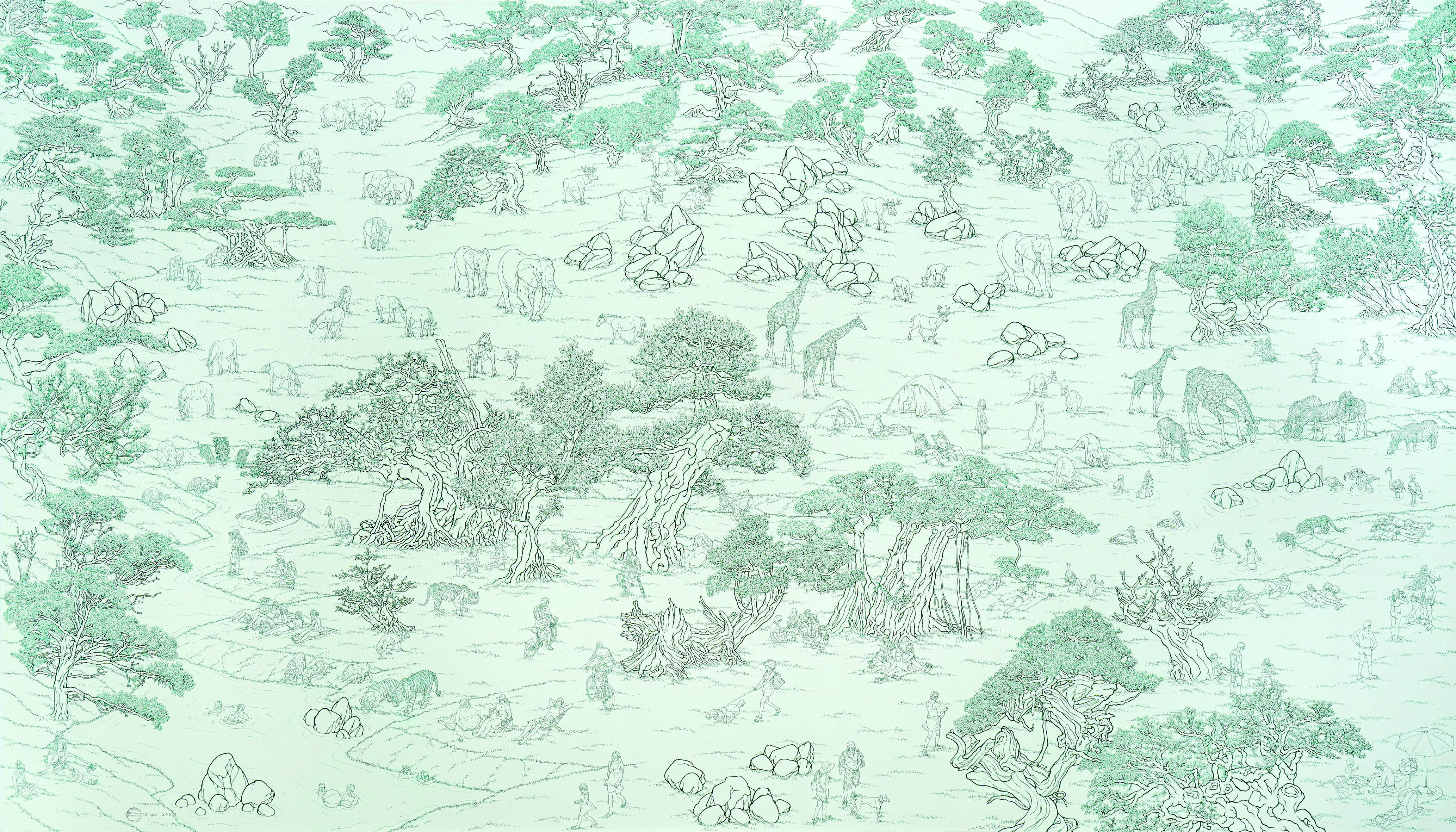
M. Irfan
In This Moment Everything Is Born Again, 2024
Acrylic on Canvas
160 x 280 cm
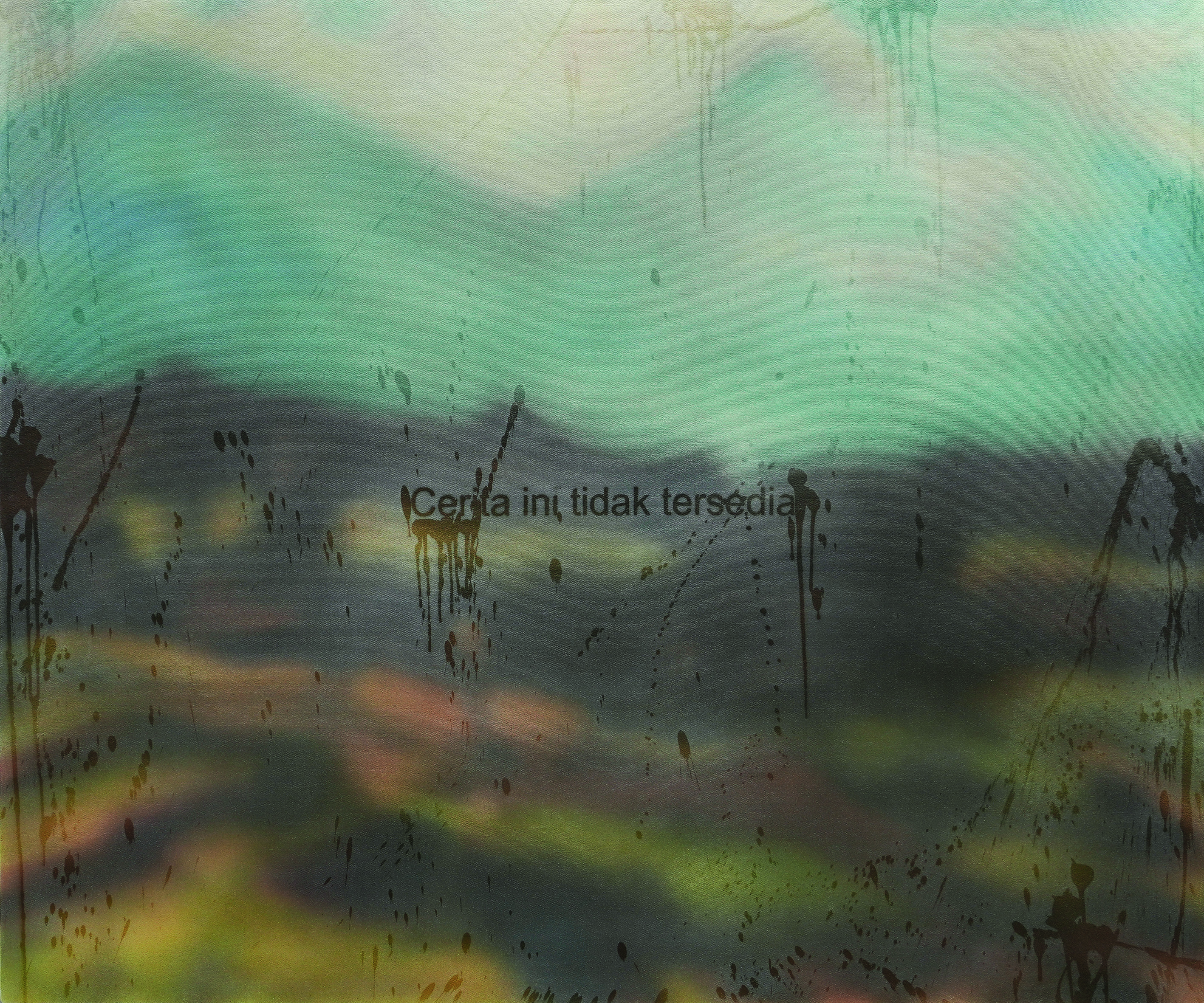
Palito Perak
Vague #1, 2023
Acrylic on Canvas
100 x 120 cm

Palito Perak
Vague #2, 2023
Acrylic on Canvas
100 x 120 cm

Ricky Qaliby
The Celestial, 2024
Mixed Media on Canvas
190 x 180 cm

Riski Januar
Paths of The Past, 2024
Acrylic on Canvas
20 x 20 cm (30 Panel)

Ronald Effendi
Painterly Reverie #1, 2024
Acrylic on Canvas
140 x 180 cm

Ronald Effendi
Painterly Reverie #2, 2024
Acrylic on Canvas
180 x 140 cm

Rumondang
Broken Angel, 2024
Acrylic on Canvas
50 x 50 cm

Rumondang
Long Way from Home, 2024
Acrylic on Canvas
140 x 150 cm

Rumondang
On the Way, 2024
Acrylic on Canvas
50 x 50 cm

Rumondang
Pretty Little Devil, 2024
Acrylic on Canvas
50 x 50 cm

Rumondang
Trial Error, 2024
Acrylic on Canvas
50 x 50 cm

Tan Maidil
Line Space #1, 2023
Acrylic on Canvas
140 x 160 cm
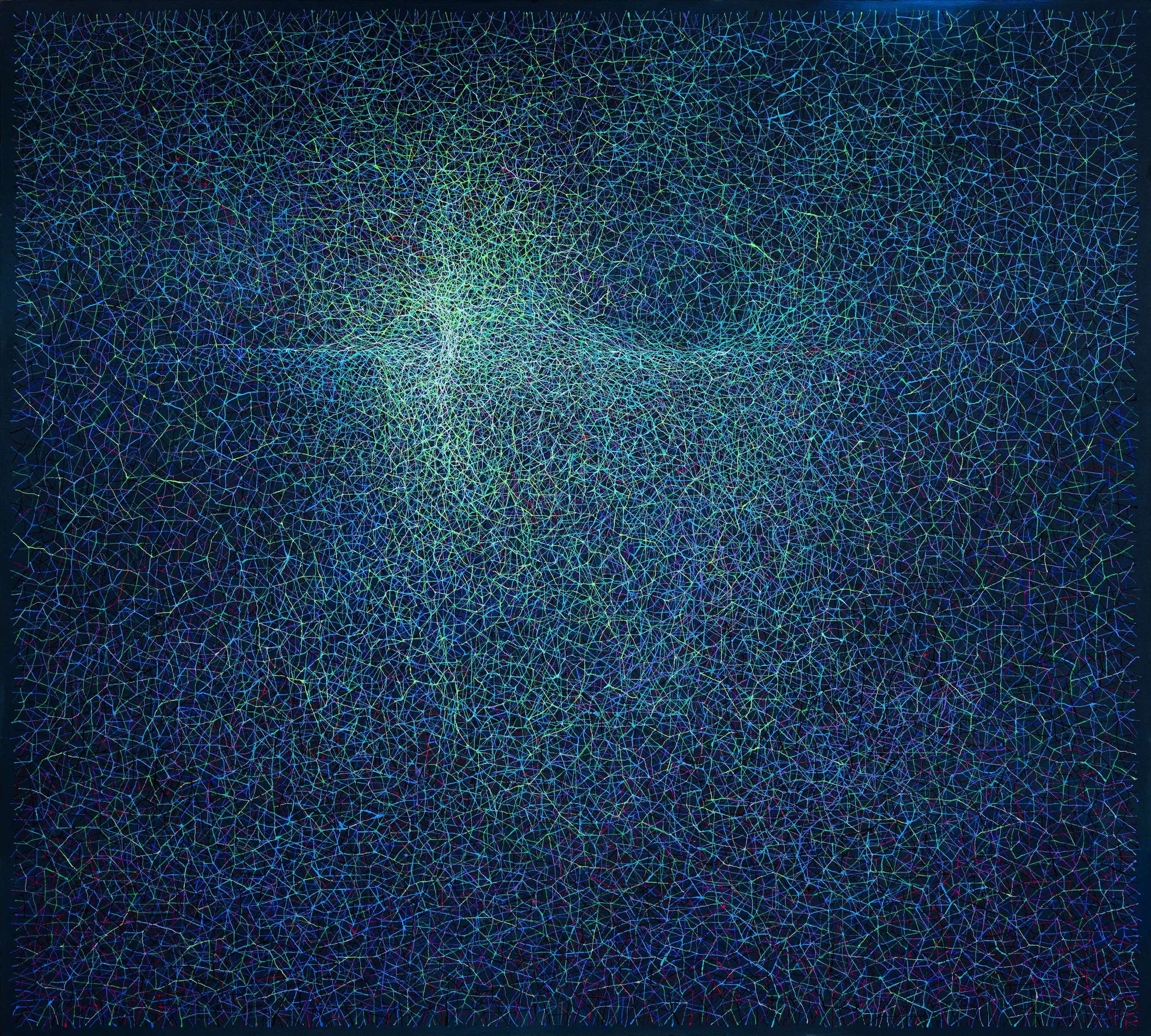
Tan Maidil
Taut #2, 2023
Acrylic on Canvas
180 x 200 cm

Taufik Ermas
Ruang Gema Panorama #1, 2024
Acrylic on Modified Canvas
110 x 110 cm

Taufik Ermas
Ruang Gema Panorama #2, 2024
Acrylic on Modified Canvas
110 x 110 cm